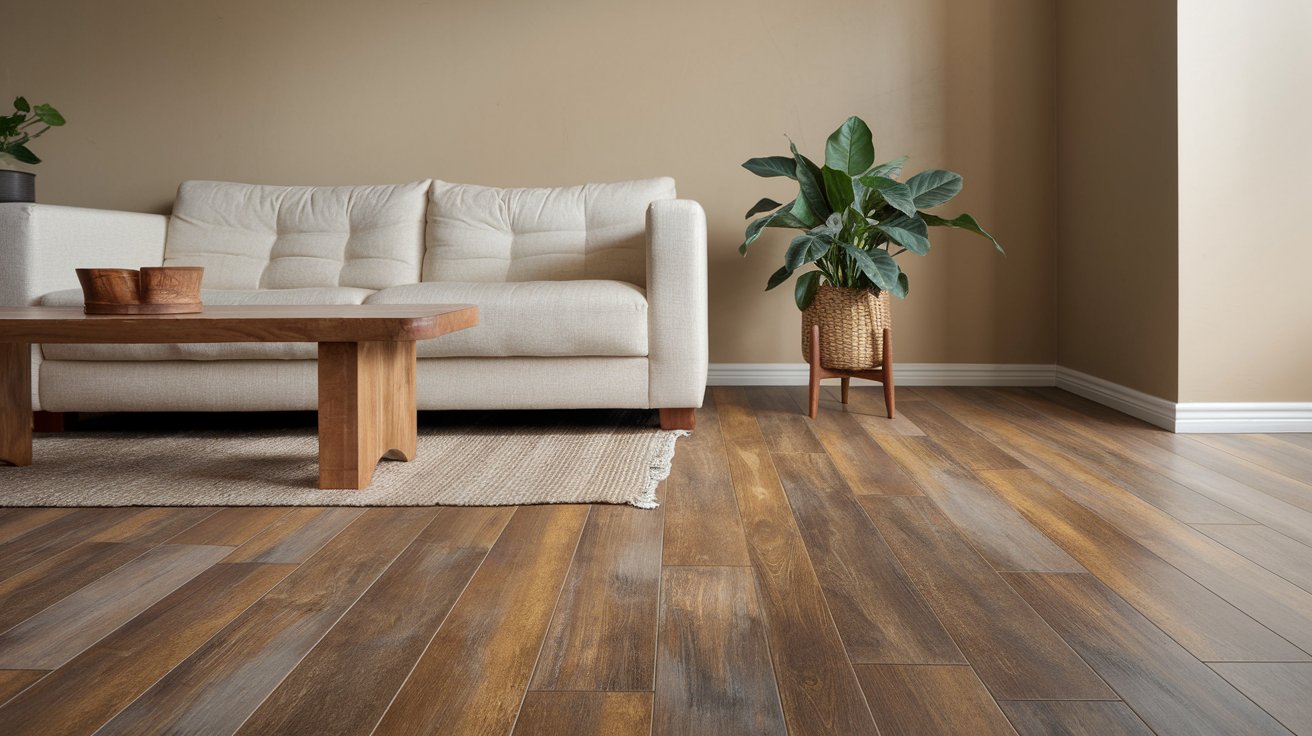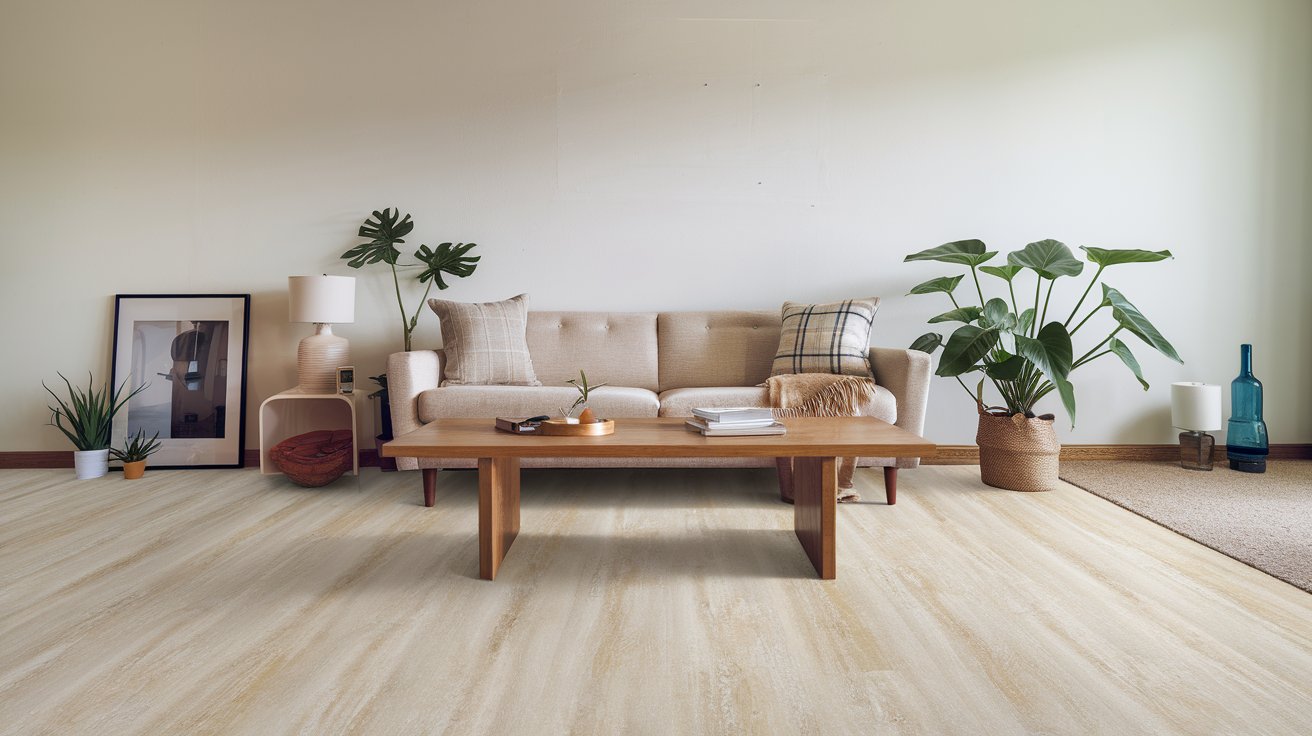
Luxury Vinyl Plank (LVP) flooring is a synthetic flooring material that replicates the appearance of hardwood, stone, or tile using multiple layers of vinyl and protective coatings. In 2026, LVP flooring has become the fastest-growing flooring category in the United States, capturing over 34% of the residential flooring market due to its waterproof capabilities, durability, and cost-effectiveness. This comprehensive guide explains everything you need to know about LVP flooring, from its construction to installation considerations.
Understanding LVP Flooring: Definition and Composition
LVP flooring stands for Luxury Vinyl Plank flooring, a multi-layered synthetic flooring product designed to mimic natural materials with exceptional realism. Unlike traditional vinyl flooring, LVP features advanced printing technology and textured surfaces that replicate wood grain patterns, knots, and color variations found in authentic hardwood. The planks typically measure 6 to 9 inches wide and 36 to 48 inches long, matching standard hardwood dimensions.
The term luxury vinyl plank distinguishes this premium product from sheet vinyl or standard vinyl tile. As of 2026, approximately 68% of LVP products sold in the United States incorporate enhanced visual layers with 3D embossing technology, creating tactile textures that align perfectly with printed wood patterns. This manufacturing advancement has positioned LVP flooring as a convincing alternative to traditional hardwood, particularly for homeowners seeking durability without sacrificing aesthetic appeal.
The Multi-Layer Structure of LVP Flooring
Understanding what LVP flooring is made of requires examining its sophisticated layer system. Each plank consists of four to six distinct layers engineered to provide specific performance characteristics. This construction method differentiates LVP from laminate flooring and solid vinyl products.
Wear Layer: The Protective Shield
The topmost wear layer typically ranges from 6 mil to 30 mil in thickness, with commercial-grade products reaching 40 mil. This transparent urethane coating protects against scratches, stains, and UV damage. In 2026, premium residential LVP flooring in the United States commonly features 12-20 mil wear layers, sufficient for households with children and pets. The wear layer thickness directly correlates with warranty length, with 20 mil products often carrying lifetime residential warranties.
Advanced ceramic bead technology, now standard in 73% of mid-range to premium LVP products, enhances scratch resistance beyond traditional urethane coatings. This innovation has significantly improved the durability profile of luxury vinyl plank flooring compared to earlier generations.
Design and Print Layers
The design layer contains high-definition photographic images of wood, stone, or tile. Modern printing technology uses up to 12 different color variations within a single product line, ensuring no two planks appear identical. The print layer sits beneath a clear vinyl film that provides depth and three-dimensionality to the visual presentation.
In 2026, approximately 82% of LVP flooring sold in the United States utilizes digital printing rather than rotogravure methods, resulting in superior image clarity and pattern registration. This technological shift has made LVP flooring better at replicating authentic materials than products manufactured even five years earlier.
Core Layer Variations
The core layer constitutes the structural foundation of LVP flooring and determines many performance characteristics. This component accounts for the primary differences in how various LVP products perform regarding stability, waterproofing, and installation requirements. The core thickness typically ranges from 4mm to 8mm in residential applications.
Material composition in the core layer varies significantly between manufacturers and product lines. This variation creates the primary distinction points when comparing what is LVP flooring across different brands and price ranges in the United States market.
Backing Layer Functions
The backing layer provides additional stability and often includes sound-dampening properties. Some manufacturers incorporate cork or foam underlayment directly into the backing, while others design their products for separate underlayment installation. Pre-attached underlayment has become increasingly common, appearing in approximately 64% of LVP flooring products sold in the United States during 2026.
The backing composition influences both acoustic performance and comfort underfoot. Premium products may include multiple backing layers with different functional purposes, such as moisture barriers combined with sound absorption materials.
LVP Core Options: PVC, WPC, and SPC Explained
The question of what is the difference between PVC, WPC, and SPC LVP core represents one of the most important considerations when selecting luxury vinyl plank flooring. These three core types offer distinct performance characteristics and price points.
Standard PVC Core Construction
PVC (polyvinyl chloride) core represents the original luxury vinyl plank construction. This solid vinyl core provides flexibility and resilience but offers limited dimensional stability in temperature fluctuations. Standard PVC core products typically retail between $2.50 and $4.50 per square foot in the United States as of 2026. These products work well in climate-controlled environments but may expand or contract noticeably in spaces with temperature variations exceeding 20 degrees Fahrenheit.
Traditional PVC core LVP flooring requires more careful subfloor preparation than rigid core alternatives, as it telegraphs imperfections more readily. However, this flexibility also provides better performance over slightly uneven surfaces in some applications.
WPC: Wood Plastic Composite Cores
WPC (Wood Plastic Composite) core combines limestone powder or recycled wood flour with PVC, creating a more stable and quieter flooring option. This composition results in a core that feels warmer and softer underfoot than SPC alternatives. WPC LVP flooring typically measures 5mm to 8mm thick and costs between $3.50 and $6.50 per square foot in the United States market.
The wood fiber content in WPC cores provides excellent sound dampening properties, reducing noise transmission by approximately 40-50% compared to standard PVC cores. This makes WPC LVP flooring better for multi-story homes and condominiums where acoustic performance matters. As of 2026, WPC products represent approximately 42% of the rigid core LVP market in the United States.
SPC: Stone Plastic Composite Technology
SPC (Stone Plastic Composite) core incorporates limestone powder at 60-70% concentration, creating an extremely dense and stable product. This core type demonstrates superior dimensional stability, with thermal expansion rates approximately 75% lower than WPC alternatives. SPC LVP flooring works exceptionally well in environments with significant temperature fluctuations, including sunrooms and three-season porches.
The rigidity of SPC cores allows for installation over more varied subfloor conditions without telegraphing minor imperfections. However, this hardness also transmits sound more readily and feels firmer underfoot. SPC LVP flooring pricing ranges from $3.00 to $7.00 per square foot across United States retailers in 2026, with premium products featuring enhanced backing systems commanding higher prices.
Waterproof Capabilities: The Truth About LVP and Moisture
One of the most frequently asked questions addresses whether LVP flooring is 100% waterproof. The answer requires understanding the distinction between the planks themselves and the installed floor system. The LVP planks are completely waterproof as individual components—vinyl does not absorb water or support mold growth.
However, the installed system’s water resistance depends on installation method and seam integrity. Click-lock LVP flooring installations create water-resistant rather than waterproof systems, as moisture can penetrate between planks if standing water remains for extended periods. Glue-down installations with properly sealed seams achieve true waterproof performance. As of 2026, approximately 78% of residential LVP flooring installations in the United States use click-lock systems rather than glue-down methods.
Subfloor protection represents another consideration. While waterproof LVP flooring prevents moisture from reaching the subfloor through the planks, water can still travel along the surface and penetrate edges or seams. Installing in wet areas requires transition moldings and careful attention to perimeter sealing to prevent moisture migration.
LVP Flooring Advantages: Why Homeowners Choose Luxury Vinyl Plank
Understanding what are the advantages of LVP flooring explains its dramatic market growth. Multiple performance characteristics combine to create compelling value propositions for United States homeowners in 2026.
Superior Durability and Wear Resistance
LVP flooring withstands heavy foot traffic, pet activity, and furniture movement better than most natural materials. The urethane wear layer resists scratches that would damage hardwood or laminate surfaces. Impact resistance surpasses ceramic tile, with dropped objects less likely to chip or crack luxury vinyl plank surfaces.
Warranty coverage reflects this durability, with residential warranties typically ranging from 20 years to lifetime coverage. Commercial warranties on heavy-duty LVP products extend 10-15 years even in high-traffic retail environments. Testing data from 2026 shows premium LVP flooring maintains appearance ratings above 3.5 on the 5-point scale after 10 years of residential use, indicating minimal visible wear.
Cost Effectiveness and Value
When comparing is LVP flooring expensive relative to alternatives, the material costs significantly less than hardwood while offering comparable aesthetics. Material pricing for quality LVP flooring ranges from $3.00 to $6.00 per square foot, whereas comparable-appearance hardwood costs $8.00 to $15.00 per square foot in the United States market.
Installation costs for click-lock LVP flooring average $1.50 to $3.00 per square foot for professional installation, approximately 40% less than hardwood installation. Many homeowners successfully complete DIY installations, eliminating labor costs entirely. The combination of lower material and installation costs makes LVP flooring accessible for budget-conscious renovations.
Easy Maintenance and Cleaning
The question can LVP be mopped has a straightforward answer: yes, and regular mopping represents the recommended maintenance approach. Unlike hardwood requiring specialized cleaners, LVP flooring tolerates standard pH-neutral floor cleaners and damp mopping without damage concerns.
Daily maintenance involves sweeping or vacuuming to remove abrasive dirt particles. Weekly damp mopping with manufacturer-approved cleaners maintains appearance without residue buildup. The waterproof nature of LVP flooring means spills can sit briefly without causing permanent damage, unlike hardwood that requires immediate cleanup. This maintenance simplicity particularly appeals to busy households and families with young children.
Installation Flexibility and Speed
Click-lock LVP flooring installs as a floating floor system without adhesives, allowing completion of average rooms in 4-6 hours. The planks connect via tongue-and-groove locking mechanisms that require no special tools beyond a utility knife and straight edge. This installation simplicity enables DIY projects that would prove challenging with hardwood or tile.
LVP flooring accommodates installation over various existing surfaces, including ceramic tile, vinyl, and concrete, provided the substrate remains flat and stable. This versatility reduces demolition costs and project timelines. Approximately 56% of LVP flooring installations in United States homes during 2026 occurred as DIY projects, reflecting the accessibility of the installation process.
LVP Flooring Disadvantages: Important Considerations
Examining what are the disadvantages of LVP flooring provides essential balance when evaluating this material. While luxury vinyl plank offers numerous benefits, certain limitations deserve consideration before purchase.
Environmental and Health Concerns
The truth about vinyl plank flooring includes acknowledging that it constitutes a petroleum-based product that does not biodegrade. Manufacturing processes and eventual disposal create environmental impacts exceeding sustainable materials like bamboo or cork. Some lower-quality LVP products may off-gas volatile organic compounds (VOCs), though FloorScore and GreenGuard certified options minimize these emissions.
Phthalate content, once a significant concern, has largely been addressed by major manufacturers. As of 2026, approximately 94% of LVP flooring sold in the United States meets phthalate-free formulation standards. However, environmentally conscious consumers may still prefer natural materials despite the practical advantages of luxury vinyl plank flooring.
Susceptibility to Damage Types
Despite excellent wear resistance, LVP flooring remains vulnerable to certain damage types. Sharp objects can gouge the surface, and heavy furniture concentrated on small points may create permanent indentations. Rubber-backed mats and certain rubber furniture pads can cause discoloration through chemical reactions with the vinyl surface.
Extreme temperature exposure represents another vulnerability. Direct sunlight through windows can cause fading and potentially warping in products with insufficient UV protection. The downside of LVP flooring in sunrooms and spaces with significant solar exposure requires consideration of window treatments or UV-resistant product selection. Temperature extremes below 50°F or above 100°F may also affect dimensional stability in some products.
Resale Value Considerations
Real estate market perceptions present a subtle disadvantage of vinyl plank flooring. While acceptance has improved dramatically, some homebuyers and real estate professionals still view LVP flooring as inferior to hardwood. This perception affects resale value in higher-end markets where authentic hardwood expectations persist.
Market research from 2026 indicates that homes with hardwood flooring sell for an average of 2.5-3.8% more than comparable homes with LVP flooring in premium United States markets above $500,000. However, in mid-range markets between $200,000 and $400,000, this differential has narrowed to less than 1%, suggesting growing market acceptance of quality luxury vinyl plank installations.
Repair and Refinishing Limitations
Unlike hardwood that can be sanded and refinished multiple times, damaged LVP flooring requires plank replacement rather than restoration. While click-lock systems facilitate individual plank replacement, matching existing planks may prove difficult years after initial installation due to product discontinuation or batch variations.
The inability to refinish means that once the wear layer shows through to the design layer, the affected planks must be replaced entirely. This contrasts with hardwood floors that can be restored to like-new condition through refinishing. However, the durability of modern LVP flooring often results in product lifespan of 20-30 years before replacement becomes necessary, partially offsetting this limitation.
LVP vs Laminate Flooring: Comprehensive Comparison
The question is LVP better than laminate depends on specific application requirements and priorities. Both represent engineered flooring alternatives to hardwood, but fundamental construction differences create distinct performance profiles.
LVP flooring uses 100% synthetic materials while laminate flooring incorporates a wood fiberboard core topped with a photographic layer and protective overlay. This core composition makes LVP waterproof whereas laminate remains water-resistant at best. Laminate exposed to standing water swells and deteriorates permanently, while LVP flooring tolerates moisture without structural damage.
Sound transmission differs significantly between these materials. Laminate flooring produces a hollow, clicking sound when walked upon, while WPC core LVP offers quieter performance. However, laminate typically feels slightly warmer underfoot and more closely replicates hardwood’s solid feel. Pricing overlaps substantially, with both materials ranging from $2.50 to $6.50 per square foot in the United States market during 2026.
Scratch resistance favors quality laminate over LVP flooring in direct comparisons, as laminate’s aluminum oxide coating exceeds vinyl wear layer hardness. However, LVP flooring demonstrates superior dent and impact resistance. Warranty terms generally favor luxury vinyl plank, with lifetime residential warranties common compared to laminate’s typical 15-25 year coverage.
LVP vs LVT: Understanding the Distinction
Confusion about what is LVP flooring vs LVT stems from similar naming and construction. LVT stands for Luxury Vinyl Tile, representing the same material category as LVP but in different dimensions and patterns. The fundamental difference lies in format rather than composition.
LVP flooring comes in plank formats mimicking hardwood, typically 6-9 inches wide by 36-48 inches long. LVT (Luxury Vinyl Tile) features square or rectangular tiles, usually 12×12 inches, 12×24 inches, or 18×18 inches, designed to replicate ceramic tile, stone, or geometric patterns. Both utilize identical layer construction with wear layers, design films, core materials, and backing systems.
Installation methods apply equally to both formats. Click-lock systems exist for both LVP and LVT, as do glue-down variants. Performance characteristics remain identical when comparing products with the same core type and wear layer thickness. The choice between LVP and LVT depends entirely on aesthetic preferences and design goals rather than functional differences. United States sales data from 2026 shows LVP commanding approximately 72% of the luxury vinyl market, with LVT representing the remaining 28%.
LVP Installation Methods and Subfloor Requirements
Successful LVP flooring installation requires proper subfloor preparation and method selection. The three primary installation approaches—floating, glue-down, and loose-lay—each suit different applications and skill levels.
Floating installation using click-lock planks represents the most popular residential method, accounting for approximately 78% of installations. This approach requires flat subfloors within 3/16 inch variance over 10 feet. Concrete, plywood, and existing vinyl or tile surfaces all work as substrates provided they meet flatness requirements. The floating floor moves slightly with temperature and humidity changes, requiring 1/4 inch expansion gaps at all walls and fixed objects.
Glue-down installation creates permanent bonds using pressure-sensitive or hard-set adhesives. This method works particularly well in commercial applications and spaces requiring absolute waterproofing. Glue-down LVP flooring tolerates slightly less perfect subfloor conditions but demands meticulous trowel technique and adhesive selection. Professional installation costs increase approximately 40-60% for glue-down versus floating installations.
Loose-lay LVP flooring relies on product weight and friction rather than locking systems or adhesives. These thick, heavy planks stay in place through friction alone, simplifying installation but limiting application to smaller rooms under 300 square feet. This method represents less than 8% of residential installations in the United States as of 2026.
Climate Considerations for LVP Flooring in the United States
Regional climate variations across the United States influence LVP flooring performance and product selection. Understanding these factors ensures optimal results in diverse environments from Arizona desert heat to Minnesota winter cold.
Temperature stability matters most in unconditioned spaces and homes in extreme climates. SPC core LVP flooring performs best in environments with temperature swings exceeding 30 degrees Fahrenheit, offering superior dimensional stability. The southern United States market, including Texas, Florida, and Arizona, shows preference for SPC cores due to temperature management in garages, sunrooms, and homes with intermittent air conditioning.
Humidity variations affect different core types distinctly. WPC core LVP flooring demonstrates slight dimensional changes in humidity extremes, though far less than laminate or hardwood. The Pacific Northwest and Southeastern coastal regions benefit from SPC products in below-grade installations where moisture exposure risks remain elevated. Approximately 64% of LVP flooring sold in high-humidity regions of the United States in 2026 featured SPC cores rather than WPC alternatives.
Cold climate performance requires attention to thermal properties. LVP flooring feels significantly colder than carpet or cork in unheated spaces, making it less suitable for basements in northern climates without radiant heating or substantial area rugs. However, compatibility with radiant heating systems makes luxury vinyl plank an excellent choice for heated floors, tolerating temperatures up to 85°F without damage.
Selecting Quality LVP Flooring: Key Evaluation Criteria
Determining quality when evaluating what is LVP flooring options requires examining specific characteristics beyond marketing claims. Several measurable factors separate premium products from budget alternatives in the United States market.
Wear layer thickness provides the primary quality indicator, with residential products ranging from 6 mil to 30 mil. Products below 12 mil suit light-traffic areas only, while 20 mil wear layers handle heavy residential use. Commercial applications demand 28-40 mil wear layers for adequate longevity. Each additional 6 mil of wear layer typically adds $0.50 to $1.00 per square foot to product cost.
Core density affects both durability and acoustic performance. Premium SPC cores weigh 4-5 pounds per square foot, while budget products may weigh under 3 pounds. Higher density correlates with better impact resistance and reduced sound transmission. WPC cores should demonstrate density sufficient to prevent compression marks from furniture, a common problem in products under $3.50 per square foot.
Visual realism depends on printing technology and embossing registration. Quality LVP flooring features embossing that aligns perfectly with printed wood grain, creating authentic texture that matches visual patterns. Budget products often show misaligned embossing or repetitive patterns that appear every 6-8 planks. Examining 10-12 planks side by side reveals pattern variation quality, with premium products showing no exact repeats within small batch samples.
Locking system quality determines installation ease and long-term joint integrity. Premium click-lock LVP flooring features reinforced locking profiles that engage with minimal force and resist separation under stress. Testing involves clicking planks together and attempting to pull them apart—quality systems resist separation while budget systems may disengage with moderate force.
LVP Flooring Alternatives Worth Considering
When asking what is a good LVP alternative, several flooring types offer comparable benefits with different trade-offs. Understanding these options provides context for informed decision-making.
Engineered hardwood combines real wood veneer with plywood backing, offering authentic wood appearance with improved moisture resistance compared to solid hardwood. This option costs $5.00 to $12.00 per square foot, positioning it between LVP and solid hardwood. Engineered hardwood can be refinished 1-3 times depending on veneer thickness, providing longevity advantages over LVP flooring. However, water resistance remains inferior to luxury vinyl plank, making it unsuitable for bathrooms and laundry rooms.
Waterproof laminate incorporates water-resistant cores and sealed edges, improving upon traditional laminate’s moisture vulnerability. These products cost $3.50 to $6.50 per square foot, comparable to premium LVP flooring. Sound transmission remains the primary disadvantage compared to WPC core LVP, with waterproof laminate producing hollow sounds when walked upon. However, scratch resistance typically exceeds vinyl alternatives.
Rigid core bamboo flooring represents an eco-friendly alternative growing in United States market share. Strand-woven bamboo offers hardness ratings exceeding red oak while maintaining sustainable material sourcing. Pricing ranges from $4.50 to $8.00 per square foot installed. Moisture resistance surpasses traditional hardwood but falls short of LVP waterproof capabilities. Environmental considerations favor bamboo significantly over petroleum-based vinyl products.
Cork flooring provides unique benefits including exceptional sound dampening and comfort underfoot. Natural antimicrobial properties and sustainable harvesting make cork environmentally superior to LVP flooring. However, maintenance requirements exceed vinyl, with periodic sealing necessary every 3-5 years. Cork costs $5.00 to $10.00 per square foot installed and demonstrates lower durability in high-traffic areas.
Related video about what is lvp flooring
This video complements the article information with a practical visual demonstration.
Your questions answered
What is the downside of LVP flooring?
The primary disadvantages of LVP flooring include its petroleum-based composition creating environmental concerns, susceptibility to damage from sharp objects and heavy furniture indentations, potential discoloration from rubber-backed mats, and inability to be refinished like hardwood. Additionally, LVP may not add as much resale value as authentic hardwood in premium housing markets above $500,000. Temperature extremes and direct sunlight can cause fading or warping in lower-quality products. However, premium LVP with proper wear layers and UV protection minimizes many of these concerns.
Is LVP better than laminate flooring?
LVP offers superior waterproof performance compared to laminate, making it the better choice for moisture-prone areas like bathrooms, kitchens, and basements. LVP also provides quieter performance, especially WPC core products, whereas laminate produces hollow sounds when walked upon. However, laminate typically offers better scratch resistance due to its aluminum oxide coating and may feel more similar to hardwood underfoot. Both materials cost similarly, ranging from $2.50 to $6.50 per square foot in 2026. LVP generally receives longer warranty coverage, with lifetime residential warranties common versus laminate’s 15-25 year typical coverage.
Can LVP flooring be mopped?
Yes, LVP flooring can and should be mopped regularly as part of routine maintenance. The waterproof nature of luxury vinyl plank tolerates damp mopping without damage concerns. Use pH-neutral floor cleaners specifically formulated for luxury vinyl or manufacturer-recommended products. Daily sweeping or vacuuming removes abrasive dirt particles, while weekly damp mopping maintains appearance. Avoid excessive water that puddles on the surface, though brief exposure causes no damage. Unlike hardwood requiring specialized cleaners and immediate spill cleanup, LVP offers maintenance simplicity that appeals to busy households.
Is LVP flooring 100% waterproof?
LVP planks themselves are 100% waterproof as individual components—vinyl does not absorb water or support mold growth. However, the installed floor system’s waterproof rating depends on installation method. Glue-down installations with properly sealed seams achieve true waterproof performance, while click-lock floating installations create water-resistant rather than completely waterproof systems. Standing water can potentially penetrate between planks in click-lock installations if left for extended periods. Proper installation with sealed perimeters and transition moldings maximizes water resistance. The core type also matters, with SPC and WPC rigid cores offering better waterproof performance than standard PVC cores.
How long does LVP flooring last in residential settings?
Quality LVP flooring with 12-20 mil wear layers typically lasts 20-30 years in residential applications with proper maintenance. Premium products with 20+ mil wear layers often carry lifetime residential warranties, reflecting expected durability. Testing data from 2026 shows that high-quality LVP maintains appearance ratings above 3.5 on a 5-point scale after 10 years of normal residential use. Factors affecting lifespan include wear layer thickness, household traffic levels, maintenance quality, and exposure to sunlight and temperature extremes. Commercial-grade LVP with 28-40 mil wear layers can last 10-15 years even in high-traffic retail environments.
What thickness of LVP flooring is best for homes?
Optimal LVP flooring thickness for residential use ranges from 5mm to 8mm total thickness, with 6-7mm representing the sweet spot for most applications. This includes the wear layer, design layer, core, and backing. Thicker products provide better sound dampening, impact resistance, and subfloor imperfection concealment. The wear layer specifically should measure at least 12 mil for moderate traffic areas and 20 mil for high-traffic zones and homes with pets. WPC cores typically measure 5-8mm thick, while SPC cores achieve excellent performance at 4-6mm due to their higher density composition. Avoid products under 4mm total thickness for residential installations.
| LVP Feature | Specification Details | Primary Benefit |
|---|---|---|
| Core Type Options | PVC, WPC (Wood Plastic Composite), SPC (Stone Plastic Composite) | Allows selection based on stability needs, sound dampening priorities, and budget |
| Waterproof Performance | 100% waterproof planks, water-resistant to waterproof installed systems | Suitable for bathrooms, kitchens, basements, and moisture-prone areas |
| Wear Layer Thickness | Residential: 12-20 mil, Commercial: 28-40 mil | Determines scratch resistance, longevity, and warranty coverage length |
| Installation Methods | Click-lock floating (78%), glue-down (18%), loose-lay (4%) | DIY-friendly installation reduces labor costs by 40-60% versus hardwood |
| Price Range (2026 US) | $2.50-$7.00 per sq ft material, $1.50-$3.00 per sq ft installation | Cost-effective alternative to hardwood at 50-70% lower total expense |
| Expected Lifespan | 20-30 years residential with proper maintenance | Long-term value with lifetime warranties on premium products |
| Maintenance Requirements | Regular sweeping/vacuuming, weekly damp mopping with pH-neutral cleaner | Minimal maintenance compared to hardwood, no refinishing required |
| Market Share (2026) | 34% of US residential flooring market, fastest-growing category | Wide product selection, competitive pricing, readily available installation services |