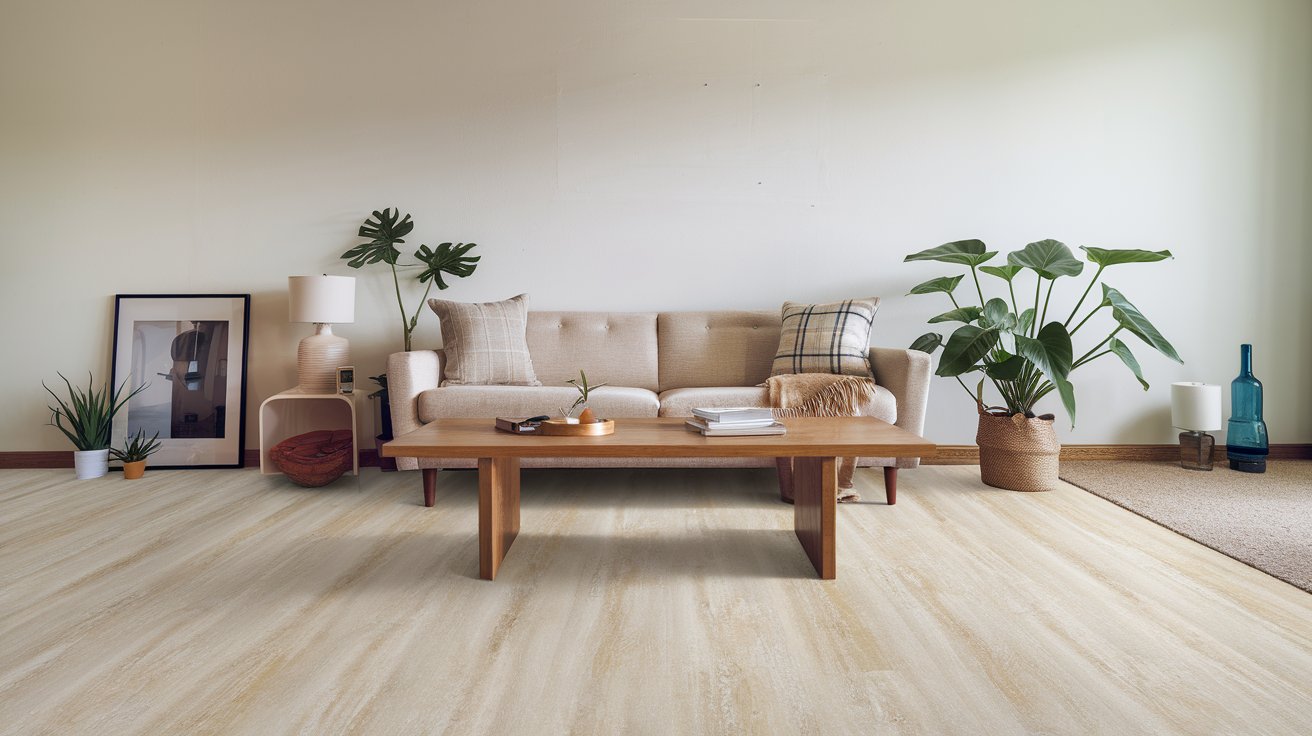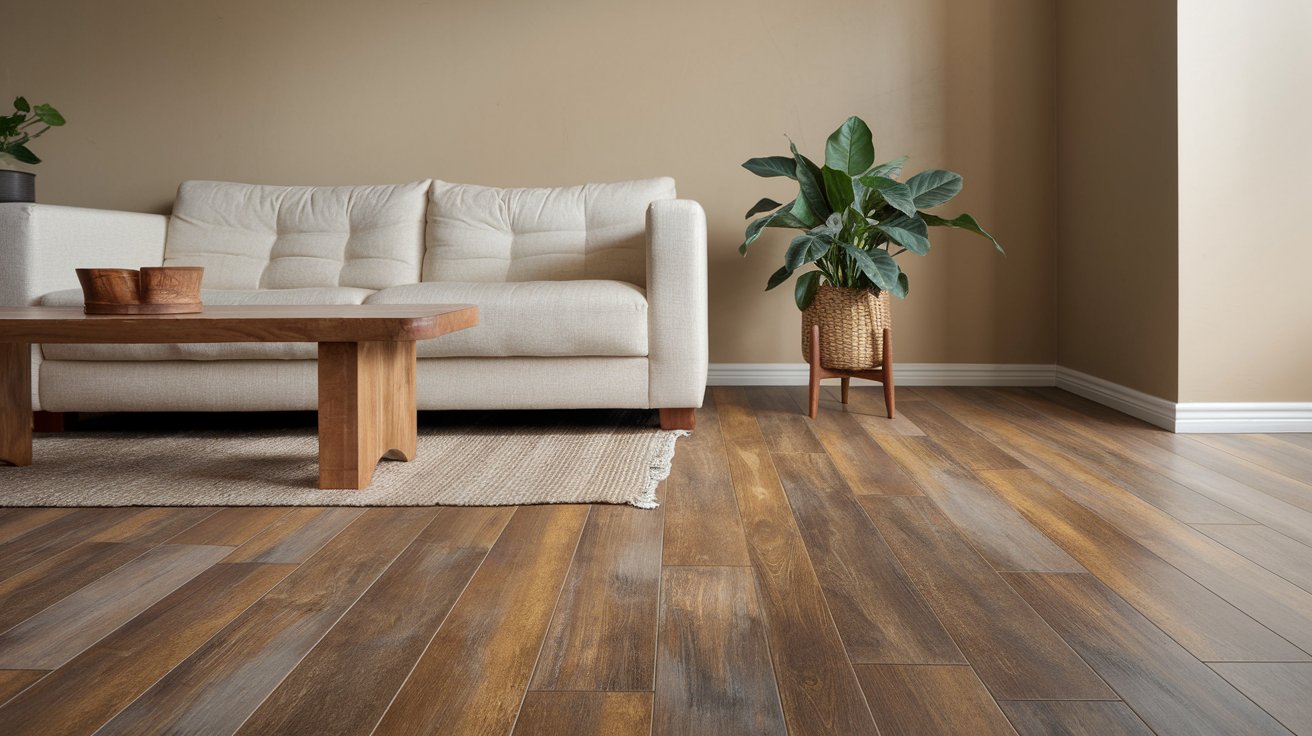
SPC flooring stands for Stone Plastic Composite flooring, a revolutionary rigid core flooring option that combines limestone powder, polyvinyl chloride, and stabilizers to create an exceptionally durable surface. In 2026, SPC flooring has become one of the most popular choices for United States homeowners seeking waterproof, scratch-resistant, and budget-friendly flooring solutions. This comprehensive guide explains everything you need to know about SPC flooring composition, performance, and whether it’s the right choice for your home.
What Is SPC Flooring and How Is It Made
SPC flooring represents the next generation of luxury vinyl flooring, featuring a rigid core constructed from approximately 60-70% limestone powder mixed with polyvinyl chloride and UV-resistant stabilizers. The manufacturing process uses intense heat and pressure to fuse these materials into an incredibly dense, stable core that measures between 3.5mm to 7mm in thickness. Unlike traditional vinyl flooring, the stone-plastic composite core provides superior dimensional stability, meaning it won’t expand or contract with temperature fluctuations common in United States climates.
The typical SPC flooring structure consists of five distinct layers working together to deliver exceptional performance. The bottom layer features an acoustic underlayment that reduces sound transmission by up to 20 decibels. Above that sits the rigid SPC core, followed by a high-definition printed design layer that replicates wood, stone, or tile patterns with remarkable accuracy. A transparent wear layer ranging from 12 mil to 30 mil thickness protects against scratches and stains, while a final UV coating prevents fading and discoloration. This engineered construction makes SPC flooring suitable for residential and commercial applications across all 50 states, from humid Florida to arid Arizona climates.
SPC vs Vinyl Flooring: Which Is Better
When comparing SPC flooring vs vinyl, the primary difference lies in the core composition and rigidity. Traditional vinyl flooring typically features a flexible PVC core that can telegraph subfloor imperfections and may require more extensive floor preparation. SPC flooring, with its rigid limestone-based core, bridges minor subfloor irregularities up to 3/16 inch, reducing installation time and preparation costs by approximately 30% according to 2026 flooring contractor surveys in the United States. The rigid construction also prevents the planks from flexing underfoot, creating a more authentic hardwood feel that many homeowners prefer.
Performance-wise, SPC flooring outperforms traditional vinyl in several critical areas for United States homeowners. The stone-plastic core provides superior dent resistance, withstanding rolling furniture loads up to 1,000 pounds per square inch without permanent indentation. Temperature stability represents another significant advantage, with SPC flooring maintaining dimensional integrity in temperatures ranging from -40°F to 176°F, making it ideal for sunrooms, basements, and garages. In 2026, SPC flooring costs average $3.50 to $7.00 per square foot in the United States, compared to $2.00 to $5.00 for traditional vinyl, reflecting the premium performance characteristics. The waterproof nature of both options makes them suitable for kitchens, bathrooms, and laundry rooms, but SPC’s rigid core provides better long-term performance in high-traffic commercial environments.
SPC vs WPC Flooring: Understanding the Differences
WPC flooring, or Wood Plastic Composite flooring, represents another rigid core option that competes directly with SPC flooring in the United States market. The fundamental difference lies in core composition: WPC flooring uses wood pulp or bamboo fibers mixed with PVC, creating a slightly softer, warmer-feeling surface underfoot. This composition makes WPC flooring approximately 15% quieter than SPC flooring when walking in hard-soled shoes, according to 2026 acoustic testing conducted by flooring manufacturers. The wood-based core also provides better thermal insulation, making WPC feel warmer in cold climates, particularly important for basement installations throughout northern United States regions.
However, SPC flooring delivers superior performance in several critical categories that matter to United States homeowners. The limestone-based core achieves a density of approximately 2.07 g/cm³ compared to WPC’s 0.90-1.00 g/cm³, resulting in better dent resistance for heavy furniture and appliances. SPC flooring maintains perfect flatness even in extreme temperature fluctuations, while WPC flooring may experience slight expansion in temperatures exceeding 140°F, limiting its use in direct sunlight applications like Florida sunrooms. In terms of cost, WPC flooring typically runs $4.00 to $8.00 per square foot versus $3.50 to $7.00 for SPC, making SPC the more economical choice for budget-conscious renovations. Both options install as floating floors using click-lock systems, with installation costs averaging $1.50 to $3.00 per square foot throughout the United States in 2026.
Is SPC Better Than Laminate Flooring
The SPC flooring vs laminate debate centers on waterproof performance and durability requirements. Traditional laminate flooring consists of a high-density fiberboard core covered with a photographic layer and protective coating, making it vulnerable to moisture damage. Even brief water exposure can cause laminate to swell, warp, and delaminate, requiring complete plank replacement. In contrast, SPC flooring features 100% waterproof construction throughout all layers, allowing it to withstand standing water for 72+ hours without damage, a critical advantage for United States homes in flood-prone regions or households with pets and children.
Performance comparisons reveal significant differences in real-world applications across United States homes. Laminate flooring offers slightly better scratch resistance in its top wear layer, with AC4 and AC5 ratings withstanding heavy commercial traffic. However, SPC flooring provides superior dent resistance due to its rigid stone-plastic core, preventing the compression damage that occurs when heavy furniture sits on laminate’s wood-fiber core. In 2026, laminate flooring costs $1.50 to $4.00 per square foot, making it more affordable than SPC’s $3.50 to $7.00 range, but replacement costs due to moisture damage often eliminate this initial savings. Sound transmission represents another consideration, with laminate producing a hollow, clicking sound when walked upon, while SPC flooring creates a more solid, authentic feel. For United States homeowners prioritizing longevity and moisture resistance, SPC flooring delivers better overall value despite higher upfront costs.
Advantages of SPC Flooring for Your Home
The waterproof performance of SPC flooring ranks as its most significant advantage for United States homeowners in 2026. Unlike hardwood or laminate, SPC flooring can be installed in bathrooms, laundry rooms, basements, and kitchens without risk of moisture damage. The limestone-based core and vinyl composition create a completely impervious barrier that prevents water absorption, mold growth, and bacterial contamination. This waterproof construction proves particularly valuable in humid southern states like Louisiana, Georgia, and South Carolina, where traditional flooring options often fail within 5-7 years due to moisture-related issues.
Durability and maintenance represent equally compelling advantages for busy households. The rigid SPC core resists dents from dropped appliances and furniture legs, while the thick wear layer protects against scratches from pet claws and grit tracked in from outside. Testing conducted in 2026 shows that SPC flooring with 20 mil wear layers maintains its appearance after 15,000+ cycles of heavy foot traffic, equivalent to 20 years of residential use. Maintenance requires only regular sweeping and occasional damp mopping with pH-neutral cleaners, eliminating the refinishing costs associated with hardwood or the special care required for natural stone. The UV-resistant coating prevents fading in sun-exposed areas, maintaining color consistency throughout its lifespan.
Installation flexibility provides another significant benefit for SPC flooring installations across the United States. The click-lock installation system allows competent DIY homeowners to install 200-300 square feet per day without professional help, reducing labor costs by $1,500-$3,000 on average room renovations. SPC flooring installs directly over existing tile, vinyl, or concrete subfloors with minimal preparation, and the rigid core bridges minor imperfections that would require extensive grinding or leveling with other flooring types. This versatility makes SPC ideal for renovation projects in older United States homes where subfloors may not meet perfect flatness standards. The floating installation method also allows for easy removal and reinstallation, preserving your investment if you relocate.
Disadvantages of SPC Flooring to Consider
Despite its many advantages, SPC flooring carries several notable drawbacks that United States homeowners should understand before purchasing. The cold, hard surface represents the most common complaint, as the stone-plastic core conducts temperature efficiently, making floors feel cold underfoot during winter months. This characteristic proves particularly problematic in northern states like Minnesota, Wisconsin, and Maine, where homeowners often add area rugs or invest in radiant heating systems to improve comfort. Unlike WPC flooring or carpet, SPC flooring provides minimal thermal insulation, potentially increasing heating costs by 5-8% in poorly insulated homes according to 2026 energy efficiency studies.
The synthetic appearance of budget-tier SPC flooring disappoints homeowners seeking authentic hardwood aesthetics. While premium SPC products feature realistic embossing and grain patterns, lower-priced options often display repetitive patterns and glossy finishes that clearly indicate artificial construction. This becomes particularly noticeable in large open-concept spaces where pattern repetition occurs every 6-8 planks. Additionally, SPC flooring cannot be refinished or sanded like hardwood, meaning any deep scratches or gouges that penetrate the wear layer result in permanent damage requiring plank replacement. The rigid core also amplifies sound transmission between floors in multi-story homes, with footsteps and dropped objects creating noise levels 15-20 decibels higher than carpet installations.
Environmental and health considerations represent emerging concerns in 2026. While most SPC flooring sold in the United States now meets FloorScore and CARB Phase 2 certification for low VOC emissions, the PVC content raises sustainability questions for environmentally-conscious consumers. The manufacturing process requires significant energy input, and end-of-life recycling options remain limited across most United States municipalities. Some lower-quality imported SPC products have tested positive for phthalates and other plasticizers, though reputable manufacturers have eliminated these substances. Installation in extreme temperature environments like unheated garages or outdoor covered patios may void warranties, as sustained temperatures below 0°F or above 140°F can affect dimensional stability despite marketing claims of temperature resistance.
How Long Does SPC Flooring Last
The lifespan of SPC flooring depends heavily on wear layer thickness and traffic levels in United States homes. Residential-grade SPC flooring with 12 mil wear layers typically lasts 10-15 years in high-traffic areas like kitchens and hallways, while the same product may last 20-25 years in bedrooms and formal living spaces. Commercial-grade options featuring 20-30 mil wear layers routinely achieve 15-20 years of service in retail and office environments with proper maintenance. In 2026, most manufacturers offer warranties ranging from 15 years for builder-grade products to lifetime residential warranties for premium collections, though these warranties typically cover manufacturing defects rather than normal wear and tear.
Several factors significantly impact the longevity of SPC flooring in practical applications. Proper subfloor preparation prevents premature failure, as installations over uneven concrete or damaged wood subfloors create stress points that eventually crack the rigid core. Using appropriate underlayment designed for SPC flooring reduces impact damage and extends wear layer life by cushioning heavy dropped objects. Climate control matters as well, with homes maintaining 60-80°F temperatures and 30-60% relative humidity experiencing 25-30% longer floor life compared to homes with extreme fluctuations. United States homeowners who implement preventive measures like furniture pads, entry mats, and regular cleaning routines often exceed manufacturer warranty periods by 5-10 years. The waterproof nature of SPC flooring eliminates moisture-related deterioration that shortens lifespans of hardwood and laminate alternatives, making it an excellent long-term investment for humid climates throughout the southern and coastal United States regions.
Does SPC Flooring Scratch and Dent Easily
Scratch resistance in SPC flooring correlates directly with wear layer thickness and quality. Products featuring 20 mil or thicker wear layers withstand typical household hazards like pet claws, dragged furniture, and tracked-in grit without visible scratching for 10-15 years according to 2026 wear testing standards. However, sharp objects like broken glass, metal furniture legs without protective pads, and high-heeled shoes with exposed metal tips can scratch even commercial-grade wear layers. The aluminum oxide or ceramic bead coating applied to premium SPC flooring provides scratch resistance comparable to AC4-rated laminate, though it cannot match the renewability of hardwood floors that can be sanded and refinished multiple times.
Dent resistance represents one of SPC flooring’s strongest performance characteristics compared to other resilient flooring options. The rigid limestone-based core resists compression from furniture loads up to 1,000 PSI, preventing the permanent indentations that plague vinyl and WPC flooring. Independent testing in 2026 demonstrates that SPC flooring recovers completely from concentrated loads that create permanent damage in softer flooring materials. However, extreme impacts from dropped appliances or tools can crack the rigid core, creating irreparable damage that requires plank replacement. United States homeowners report excellent performance under refrigerators, pianos, and heavy furniture when using appropriate protective pads. The hardness that prevents denting also means SPC flooring offers no cushioning for dropped dishes or glassware, resulting in higher breakage rates compared to softer vinyl or cork alternatives. Overall, the scratch and dent resistance of quality SPC flooring exceeds most competing products in the $3-7 per square foot price range, making it an excellent choice for active households with children and pets.
Does SPC Flooring Need Underlay
The underlay requirement for SPC flooring depends on several factors including subfloor type, built-in padding, and acoustic needs. Many SPC flooring products manufactured in 2026 include pre-attached underlayment on the bottom layer, eliminating the need for separate installation. This integrated padding typically measures 1-2mm thick and provides basic moisture protection and minor sound dampening. However, installations over concrete subfloors in basements or ground-level rooms benefit significantly from dedicated vapor barrier underlayment that prevents moisture transmission from below, even though SPC flooring itself remains waterproof. The vapor barrier protects the subfloor and prevents musty odors that can develop when moisture becomes trapped between concrete and flooring.
United States homeowners seeking enhanced comfort and sound reduction should consider premium underlayment options regardless of pre-attached padding. Cork or foam underlayment measuring 2-3mm thick reduces sound transmission by an additional 10-15 decibels, crucial for second-story installations where footstep noise disturbs lower-level rooms. These upgraded materials also improve thermal insulation by R-0.5 to R-1.0, making cold SPC floors more comfortable during winter months in northern states. Installation over existing tile floors benefits from cushioned underlayment that bridges grout lines and prevents the telegraphing pattern that occurs when rigid SPC planks settle into recessed areas. Quality underlayment costs $0.30 to $0.80 per square foot in 2026, adding 10-15% to total project costs but significantly improving comfort and performance. Always verify manufacturer guidelines, as some warranties require specific underlayment types or prohibit certain materials that may cause chemical reactions with the SPC flooring backing layer.
Choosing the Right SPC Flooring for Your Home
Selecting appropriate SPC flooring requires evaluating several critical specifications beyond surface appearance. The wear layer thickness represents the most important performance factor, with 12 mil suitable for light residential use, 20 mil recommended for typical family homes with pets, and 30 mil necessary for commercial or extreme high-traffic applications. Plank thickness ranging from 4mm to 8mm affects installation flexibility and sound dampening, with thicker products bridging subfloor imperfections better but requiring more precise undercut trimming around door jambs and cabinetry. In 2026, United States consumers should prioritize products certified by FloorScore for low VOC emissions and CARB Phase 2 compliance for formaldehyde standards, particularly important for homes with young children or sensitive individuals.
The locking mechanism quality dramatically impacts installation ease and long-term performance. Premium SPC flooring features angle-tap or drop-lock systems that allow planks to connect without gaps, while budget products use basic tongue-and-groove designs prone to separation over time. Testing the lock by connecting sample planks reveals how securely they join and whether they separate easily during normal handling. Color and pattern selection should account for room size and lighting, with lighter tones making small spaces appear larger and darker options hiding dirt in high-traffic areas better. Realistic embossing that matches the printed grain pattern indicates quality manufacturing, while misaligned or generic textures suggest lower-tier products. United States homeowners should request samples to view in their actual lighting conditions before purchasing, as showroom LED lighting often misrepresents how colors appear in natural daylight. Calculate 10% overage for cutting waste, and verify return policies allowing unused boxes to be returned within 30 days, protecting your investment if you encounter installation challenges or discover the product doesn’t meet expectations.
SPC Flooring Installation Requirements and Costs
Professional SPC flooring installation costs average $1.50 to $3.00 per square foot throughout the United States in 2026, varying by region and subfloor condition. Complex layouts involving diagonal patterns, multiple transitions, or extensive furniture moving increase labor costs by 25-40%. The subfloor preparation requirements remain minimal compared to other flooring types, though surfaces must be clean, dry, and relatively flat within 3/16 inch over 10 feet. Concrete subfloors require moisture testing to ensure readings below 4.5% on calcium chloride tests, while wood subfloors need structural integrity verification to prevent flexing that could stress the rigid SPC planks. Removal of existing flooring adds $0.75 to $2.00 per square foot depending on material type and adhesive used.
DIY installation represents a viable option for handy United States homeowners with basic carpentry skills. The click-lock installation system requires only standard tools including a tape measure, utility knife, tapping block, and pull bar, with total tool investment under $100. Most manufacturers provide detailed installation videos and instructions, though hiring professionals ensures proper acclimation, expansion gap maintenance, and transition strip installation. The floating floor method requires 1/4 inch expansion gaps along all walls and vertical surfaces, accommodating the minimal expansion that occurs even in stable SPC flooring. Installation over radiant heating systems requires verification that surface temperatures never exceed 85°F, with programmable thermostats preventing damage during extreme weather events. Factor in $150-$300 for transition strips, quarter round molding, and stair nose pieces to complete professional-looking installations. Total project costs including materials, labor, and accessories typically range from $5.50 to $12.00 per square foot for complete SPC flooring installations in United States homes during 2026.
Maintaining and Caring for SPC Flooring
Proper maintenance of SPC flooring requires minimal effort while significantly extending its lifespan. Daily or weekly sweeping with soft-bristle brooms or dust mopping removes abrasive grit that gradually wears down the protective wear layer. For deeper cleaning, damp mopping with pH-neutral cleaners specifically formulated for luxury vinyl flooring prevents residue buildup that dulls the surface finish. Avoid steam mops despite waterproof claims, as excessive heat can soften adhesive layers and damage printed design elements over time. United States homeowners should immediately wipe up spills to prevent staining from substances like red wine, coffee, or pet accidents, though the impervious surface prevents actual absorption and damage if addressed within 24 hours.
Preventive measures protect SPC flooring from premature wear and maintain its appearance for decades. Place walk-off mats at all exterior doors to trap 80% of tracked-in dirt and moisture within the first six feet of entry, dramatically reducing abrasive particles that scratch the wear layer. Install felt pads under all furniture legs and replace them annually as they compress and lose effectiveness. Area rugs in high-traffic zones distribute wear patterns and add warmth to the characteristically cool surface. Trim pet nails regularly to minimize scratching, and use protective mats under pet food bowls where water spills occur frequently. Avoid rubber-backed mats that can cause discoloration through chemical reactions with the vinyl composition. For commercial applications or homes with extreme traffic, consider professional cleaning services annually using auto-scrubbers and specialized cleaners that remove embedded dirt beyond the reach of residential cleaning methods. These simple maintenance practices cost less than $200 annually but can extend SPC flooring lifespan by 5-10 years, maximizing return on the initial $3.50-$7.00 per square foot investment made by United States homeowners.
Related video about what is spc flooring
This video complements the article information with a practical visual demonstration.
What you should know
What are the downsides of SPC flooring?
The primary downsides of SPC flooring include its cold, hard surface that feels uncomfortable underfoot in winter months, particularly in northern United States climates. The rigid stone-plastic core cannot be refinished if deeply scratched, requiring complete plank replacement for significant damage. Budget-tier products often display synthetic appearances with repetitive patterns that lack the authenticity of real hardwood. Additionally, SPC flooring amplifies sound transmission compared to carpet, with footsteps and dropped objects creating noticeable noise in multi-story homes. Some environmentally-conscious consumers express concerns about the PVC content and limited recycling options available throughout most United States municipalities in 2026.
Which is better, SPC or vinyl flooring?
SPC flooring outperforms traditional vinyl flooring in most performance categories relevant to United States homeowners. The rigid limestone-based core provides superior dent resistance, better subfloor bridging capabilities, and enhanced dimensional stability in temperature fluctuations ranging from -40°F to 176°F. SPC flooring feels more solid and authentic underfoot compared to flexible vinyl, and it installs faster with less subfloor preparation required. While traditional vinyl costs less at $2.00-$5.00 per square foot versus $3.50-$7.00 for SPC, the improved durability and reduced installation costs often make SPC the better long-term value for permanent installations in 2026.
Is SPC better than laminate flooring?
SPC flooring proves superior to laminate for moisture-prone areas and homes in humid United States regions, as its 100% waterproof construction prevents the swelling and delamination that destroys laminate flooring with water exposure. The rigid stone-plastic core resists dents better than laminate’s wood-fiber core, particularly under heavy furniture and appliances. However, laminate flooring costs significantly less at $1.50-$4.00 per square foot and offers slightly better scratch resistance with AC4-AC5 ratings. For United States homeowners prioritizing waterproof performance and long-term durability, SPC flooring represents the better investment despite higher upfront costs in 2026.
Does SPC flooring need underlay?
Many SPC flooring products include pre-attached underlayment and technically do not require additional padding for basic installations. However, United States homeowners benefit from adding dedicated underlayment in specific situations. Concrete subfloors require vapor barrier underlayment to prevent moisture transmission from below, while second-story installations benefit from acoustic underlayment that reduces sound transmission by 10-15 decibels. Premium cork or foam underlayment also improves thermal insulation and comfort underfoot, addressing the characteristically cold feel of SPC flooring during winter months. Quality underlayment costs $0.30-$0.80 per square foot in 2026 but significantly enhances comfort and performance when properly selected.
How much does SPC flooring cost in 2026?
SPC flooring costs range from $3.50 to $7.00 per square foot for materials in the United States during 2026, with builder-grade options at the lower end and premium designer collections reaching the higher price points. Professional installation adds $1.50 to $3.00 per square foot, while additional expenses include underlayment at $0.30-$0.80 per square foot and transition strips averaging $150-$300 per project. Total installed costs typically range from $5.50 to $12.00 per square foot, making SPC flooring more expensive than traditional vinyl but competitive with mid-grade laminate and engineered hardwood. The waterproof performance and 15-20 year lifespan provide excellent value for United States homeowners seeking durable, low-maintenance flooring solutions.
Can SPC flooring be installed over existing tile?
Yes, SPC flooring can be successfully installed over existing tile in United States homes, provided the tile surface remains structurally sound, firmly adhered, and reasonably flat within 3/16 inch over 10 feet. The rigid core bridges grout lines effectively, though installing 2mm cushioned underlayment prevents the tile pattern from telegraphing through and creating visible lines in the SPC surface. Loose or damaged tiles must be repaired or removed before installation, and high-gloss tiles should be lightly sanded to improve adhesion of any tape or adhesive used for transition strips. This installation method saves considerable time and money by eliminating tile removal costs averaging $2-4 per square foot in 2026, making it an attractive option for budget-conscious renovations.
| Feature | SPC Flooring Specification | Key Benefit |
|---|---|---|
| Core Composition | 60-70% limestone powder with PVC and stabilizers | Superior dimensional stability and dent resistance |
| Waterproof Rating | 100% waterproof for 72+ hours standing water | Suitable for bathrooms, kitchens, and basements |
| Wear Layer | 12-30 mil thickness with aluminum oxide coating | Excellent scratch resistance for 15-20 years |
| Temperature Range | -40°F to 176°F stable performance | Works in all United States climate zones |
| Installation Method | Click-lock floating floor system | DIY-friendly with minimal subfloor preparation |
| Cost Range 2026 | $3.50-$7.00 per sq ft material only | Competitive pricing with superior performance |
| Lifespan | 15-25 years residential use with proper care | Excellent long-term value and ROI |
| Maintenance | Sweep and damp mop with pH-neutral cleaners | Minimal upkeep compared to hardwood or tile |