Choosing the best flooring for basement spaces requires careful consideration of moisture resistance, durability, and budget. Unlike upper-level rooms, basements face unique challenges including concrete subfloors, potential moisture issues, and temperature fluctuations. The right basement flooring can transform your below-grade space into a comfortable, functional area while protecting against water damage and providing long-lasting value for your home.
What Type of Flooring Is Best for Basements
The type of flooring best for basements depends on your specific moisture levels, budget, and intended use. In 2026, homeowners across the United States are prioritizing waterproof options that can withstand the unique conditions of below-grade spaces. Basements typically experience higher humidity levels than other areas of the home, with average relative humidity ranging from 50-60% even in climate-controlled environments. This moisture factor makes traditional hardwood and certain laminate options unsuitable for most basement applications.
The most successful basement flooring materials share common characteristics: they resist moisture damage, handle temperature variations, install directly over concrete, and provide comfortable walking surfaces. According to 2026 industry data from the National Association of Home Builders, over 68% of basement renovations now incorporate waterproof flooring options, up from 52% in 2023. The right flooring choice protects your investment while creating a space that adds functional square footage to your home.
Luxury Vinyl Plank and Tile Flooring for Basements
Luxury vinyl plank (LVP) and luxury vinyl tile (LVT) have become the most popular basement flooring choices in the United States, capturing 43% of the basement flooring market in 2026. These engineered products offer complete waterproof protection, realistic wood or stone appearances, and installation methods that work perfectly over concrete. You can put vinyl flooring directly on concrete basement floors when the surface is level, clean, and properly prepared, making it an ideal DIY-friendly option for many homeowners.
Modern vinyl flooring products feature rigid core construction with multiple layers that provide stability and comfort. The typical LVP structure includes a UV-resistant wear layer, photographic design layer, rigid SPC (stone plastic composite) or WPC (wood plastic composite) core, and attached underlayment. Premium options in 2026 offer wear layer thicknesses of 20-40 mils, providing exceptional durability for high-traffic basement spaces. Installation costs range from $3.50 to $8.00 per square foot professionally installed, or $1.50 to $4.00 per square foot for DIY projects using click-lock floating systems.
Benefits of Vinyl Flooring Over Concrete
Installing vinyl flooring over concrete basement floors offers numerous advantages that make it the top recommendation for moisture-prone areas. The waterproof core prevents water absorption even during minor flooding events, and the material naturally resists mold and mildew growth. Vinyl provides a warmer surface temperature than bare concrete, improving comfort during cold months without requiring radiant heating systems. The resilient construction absorbs impact and reduces noise transmission, creating quieter living spaces ideal for basement entertainment rooms or home offices.
In 2026, advanced vinyl basement flooring includes antimicrobial treatments, enhanced UV protection for walkout basements with natural light, and improved locking mechanisms that prevent gapping in fluctuating humidity conditions. The floating installation method allows for natural concrete expansion and contraction without damaging the floor surface, while built-in underlayment provides cushioning and minor subfloor imperfection forgiveness up to 3/16 inch variance per 10-foot span.
Can You Put Vinyl Flooring Directly on Concrete Basement Floor
Yes, you can put vinyl flooring directly on concrete basement floors, provided the concrete meets specific preparation requirements. The concrete surface must be cured for at least 60 days, completely dry with moisture vapor emission rates below 5 pounds per 1,000 square feet per 24 hours when tested with calcium chloride tests, and level within manufacturer specifications. In 2026, most vinyl flooring manufacturers require flatness within 3/16 inch over a 10-foot radius, though some premium products tolerate up to 1/4 inch variance.
Proper concrete preparation involves cleaning to remove all dirt, grease, paint, and sealers, filling cracks wider than 1/8 inch with concrete patch compound, and grinding down high spots. For basement concrete floors with minor moisture concerns, applying a moisture vapor barrier primer creates an additional protection layer before vinyl installation. Direct installation over concrete eliminates the expense and height considerations of plywood subfloor systems, saving approximately $1.50 to $2.50 per square foot in material and labor costs while preserving valuable headroom in basements with lower ceiling heights.
Best Flooring Options Over Concrete Basement Surfaces
Beyond vinyl, several other flooring options over concrete basement surfaces deliver excellent performance when properly selected and installed. Each material offers distinct advantages depending on your specific requirements, aesthetic preferences, and budget constraints. Understanding the characteristics of each option helps homeowners make informed decisions that balance immediate costs with long-term durability and maintenance requirements.
Epoxy and Polyurethane Coating Systems
Epoxy basement flooring creates a seamless, completely waterproof surface directly bonded to concrete, making it ideal for utility areas, workshops, and modern industrial-aesthetic living spaces. Professional-grade epoxy systems in 2026 feature multi-layer applications with primer coats, colored base coats, optional decorative flake additions, and clear topcoat sealers providing 10-15 year durability. These coatings resist chemicals, oils, and heavy impacts while maintaining easy-clean surfaces that require only occasional mopping. Installation costs range from $4.00 to $12.00 per square foot for professional application, with DIY kits available from $1.50 to $3.50 per square foot.
Polyurethane coatings offer greater flexibility than traditional epoxy for concrete applications, making them superior choices for basements experiencing minor settling or temperature extremes. The elastic nature prevents cracking and peeling, while UV-stable formulations resist yellowing in walkout basements. Polyurethane systems dry faster than epoxy, allowing floor use within 24-48 hours compared to 5-7 days for epoxy. However, surface preparation remains critical—concrete must be diamond-ground or acid-etched to ensure proper adhesion and prevent future delamination.
Ceramic and Porcelain Tile for Basement Floors
Ceramic and porcelain tile provide completely waterproof, permanent flooring solutions that add significant value to finished basements. Porcelain tile, with its denser composition and water absorption rate below 0.5%, offers superior moisture resistance compared to standard ceramic options. In 2026, large-format tiles (12×24, 24×24, and 24×48 inches) dominate basement installations, reducing grout lines and creating contemporary appearances while minimizing maintenance requirements. Wood-look porcelain planks deliver authentic hardwood aesthetics without moisture vulnerability, combining the beauty of natural materials with practical basement durability.
Professional tile installation over concrete basement floors requires crack isolation membranes to prevent concrete movement from telegraphing through to the tile surface. Modified thinset mortars designed specifically for concrete substrates ensure proper bonding, while epoxy or urethane grouts resist moisture penetration and staining. Total installation costs range from $8.00 to $18.00 per square foot including materials and labor, making tile a premium investment that provides 25-30 year lifespan with minimal maintenance beyond routine cleaning and occasional grout sealing.
Engineered Hardwood and Laminate Basement Flooring
Engineered hardwood flooring brings authentic wood beauty to basements with greater moisture stability than solid hardwood. The cross-layered construction—featuring a real wood veneer over plywood or HDF core—resists expansion and contraction from humidity changes that would warp solid wood planks. However, engineered hardwood requires strict moisture control with basement relative humidity maintained between 35-55% year-round. In 2026, only basements with comprehensive moisture management systems including exterior waterproofing, interior drainage, and dehumidification should consider engineered wood installations.
Waterproof laminate flooring has evolved significantly, with 2026 products featuring water-resistant or fully waterproof core materials that protect against moisture from above and below. Traditional HDF (high-density fiberboard) cores absorb water and swell irreversibly, but newer SPC and WPC laminate cores provide genuine waterproof performance comparable to luxury vinyl. These advanced laminates install as floating floors over moisture barriers on concrete, cost $2.50 to $6.00 per square foot, and deliver wood-look aesthetics at lower price points than engineered hardwood. Installation requires 6-mil polyethylene vapor barriers and foam underlayment to protect against concrete moisture transmission.
Carpet and Carpet Tile for Basement Applications
Basement carpet creates warm, comfortable spaces ideal for family rooms, bedrooms, and home theaters when properly selected and installed. The key to successful carpet performance in basements involves choosing 100% synthetic fibers (nylon, polyester, or polypropylene) that resist moisture damage and mold growth. Avoid natural wool carpets in basement environments regardless of quality, as organic fibers support microbial growth when exposed to elevated humidity. In 2026, solution-dyed nylon carpets with antimicrobial treatments and moisture-resistant backings dominate basement installations, offering 10-15 year lifespans when basements maintain proper humidity control.
Carpet tile systems provide practical advantages over broadloom carpet for basement installations. Individual tiles (typically 18×18 or 24×24 inches) install without adhesive using peel-and-stick backing or interlocking edges, allow for easy replacement of damaged sections, and can be removed for concrete inspection or repairs. Modular carpet tiles cost $2.00 to $7.00 per square foot installed and feature moisture-resistant backing systems with built-in vapor barriers. The removable nature makes carpet tiles ideal for basements with minor recurring moisture issues, as sections can be lifted, dried, and reinstalled without complete floor replacement.
Rubber and Foam Flooring for Multipurpose Basements
Rubber flooring excels in basement gyms, playrooms, and multipurpose spaces requiring impact absorption, noise reduction, and complete water resistance. Commercial-grade rubber tiles and rolls withstand heavy equipment, resist bacterial growth, and install directly over concrete without adhesives using interlocking systems or loose-lay applications. In 2026, recycled rubber products dominate the market at $3.00 to $8.00 per square foot, offering environmentally conscious options with identical performance to virgin rubber materials. The dense, resilient surface provides joint-friendly cushioning for exercise areas while maintaining stability for free weights and cardio equipment.
Foam floor tiles create soft, safe play surfaces for basement children’s areas and home daycares. Interlocking EVA (ethylene-vinyl acetate) foam tiles provide cushioned protection against falls, insulate against cold concrete, and resist moisture damage. Premium foam tiles in 2026 feature non-toxic, phthalate-free construction meeting or exceeding CPSIA safety standards, with thicknesses ranging from 1/2 inch to 1 inch for varying impact protection levels. Installation requires no tools or adhesives, costs $1.50 to $4.00 per square foot, and allows complete floor replacement or reconfiguration as children’s needs change over time.
Best Flooring for Basement in Canada and Cold Climates
The best flooring for basement in Canada and northern United States regions must withstand greater temperature extremes, freeze-thaw cycles affecting foundation walls, and longer heating seasons creating sustained low humidity conditions. Canadian basements frequently experience temperatures 5-10 degrees Fahrenheit colder than comparable United States installations, requiring flooring materials that maintain flexibility and structural integrity at lower temperatures. Rigid materials like ceramic tile may crack more readily in extreme cold, while certain vinyl products become brittle below 50 degrees Fahrenheit during installation.
Cold climate basement flooring recommendations prioritize insulating properties and temperature performance ranges. Luxury vinyl with WPC cores provides superior cold-temperature flexibility compared to SPC cores, maintaining workability down to 40 degrees Fahrenheit. Cork flooring offers exceptional thermal insulation with R-values approaching 1.0 per inch thickness, creating warmer walking surfaces without radiant heating systems. Engineered hardwood with Canadian-manufactured cores designed for climate extremes performs reliably when basements maintain strict 35-45% relative humidity during heating seasons. Installation best practices include perimeter expansion gaps 25% larger than standard requirements to accommodate greater seasonal movement, and allowing materials to acclimate in the installation environment for 72-96 hours before installation.
Moisture Testing and Concrete Preparation Requirements
Proper moisture testing for concrete basement floors prevents costly flooring failures regardless of material selection. The industry-standard calcium chloride test measures moisture vapor emission rates over 60-72 hours, with results indicating pounds of moisture per 1,000 square feet per 24 hours. Most flooring manufacturers specify maximum emission rates of 3-5 pounds, though some moisture-tolerant products accept up to 8 pounds. In 2026, digital moisture meters using electrical impedance provide immediate readings, though calcium chloride tests remain the definitive standard for warranty compliance and dispute resolution.
Relative humidity testing using in-situ probes installed in drilled holes within the concrete slab provides the most accurate long-term moisture assessment. Probes placed at 40% depth for slabs drying from one side, or 20% and 40% depth for slabs drying from both sides, measure ambient humidity within the concrete itself. Concrete floor preparation for basement flooring includes diamond grinding or shot blasting to remove surface contaminants and create proper surface profile for adhesives, filling cracks and joints with flexible polyurethane or epoxy fillers, and applying moisture mitigation systems when emission rates exceed flooring tolerances. Professional moisture testing costs $200-500 for comprehensive analysis, while surface preparation averages $1.50-3.50 per square foot depending on existing concrete conditions.
Installation Methods and Subfloor Systems
Basement flooring installation methods divide into three primary categories: direct-to-concrete, floating floor systems, and elevated subfloor assemblies. Direct installation bonds materials to concrete using adhesives, mechanical fasteners, or chemical coatings, creating permanent installations with no height addition. Floating systems rest on underlayment without attachment, allowing for thermal expansion and easy removal for future access to concrete. Elevated subfloors create air gaps between concrete and finished flooring, providing thermal insulation and moisture management through ventilation channels.
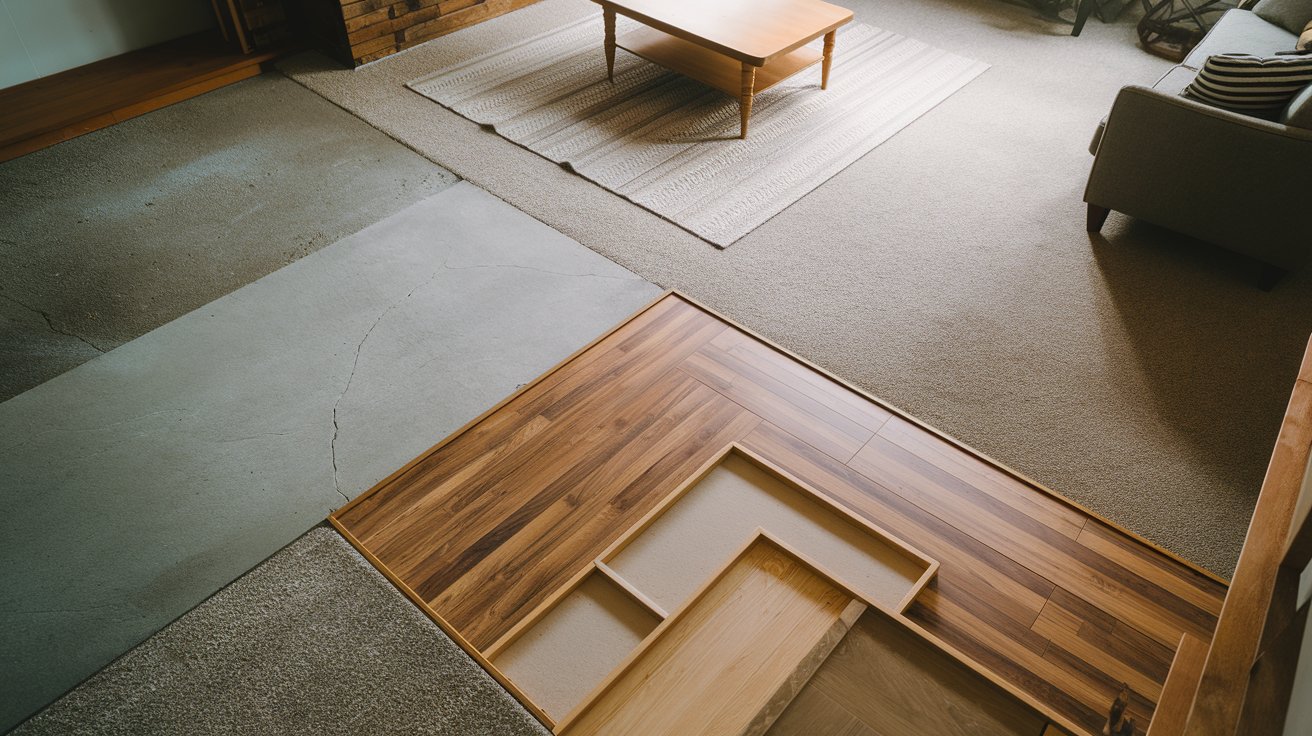
Engineered subfloor systems for basements have advanced significantly in 2026, with modular plastic panel systems replacing traditional sleeper-and-plywood assemblies. These interlocking panels elevate flooring 3/8 to 3/4 inch above concrete, incorporate drainage channels for moisture evaporation, and install without adhesives or fasteners. Thermally-insulated panels include closed-cell foam layers providing R-values of 3.0-6.0, dramatically improving floor surface temperatures and overall basement comfort. Subfloor panel systems cost $2.50-5.00 per square foot installed, add minimal height compared to framed systems, and accommodate any finish flooring type including carpet, vinyl, laminate, or engineered hardwood. The investment proves particularly valuable in basements with marginal moisture conditions or cold concrete temperatures that would otherwise limit flooring options.
Budget Considerations and Cost Comparison
Basement flooring costs vary dramatically based on material selection, installation method, and required concrete preparation. Budget-conscious homeowners can achieve quality results with painted epoxy coatings or basic vinyl plank products at total costs of $2.00-4.00 per square foot including DIY installation. Mid-range options including quality luxury vinyl, waterproof laminate, or carpet tile systems run $5.00-9.00 per square foot professionally installed. Premium materials such as porcelain tile, engineered hardwood, or decorative epoxy systems cost $10.00-18.00 per square foot, delivering enhanced aesthetics and extended lifespans that justify higher initial investment.
Total project costs for finishing basement floors in 2026 must account for concrete preparation, moisture mitigation, subfloor systems, and materials. A typical 800 square foot basement renovation ranges from $3,200-6,400 for budget vinyl installations to $8,000-14,400 for premium tile or engineered wood projects including all preparation and installation labor. Return on investment studies indicate that quality basement flooring adds $0.50-0.75 in home value for every dollar invested, making it among the most cost-effective improvements for increasing usable living space. Homeowners should budget an additional 10-15% beyond material and installation costs for unforeseen concrete repairs, moisture remediation, or trim and transition pieces required for professional-quality finished results.
Related video about best flooring for basement
This video complements the article information with a practical visual demonstration.
Frequently Asked Questions
What is the most waterproof flooring for basements?
The most waterproof flooring options for basements include luxury vinyl plank with rigid waterproof cores, porcelain tile, and epoxy coating systems. Luxury vinyl offers 100% waterproof construction throughout all layers, preventing water absorption even during minor flooding events. Porcelain tile with proper waterproof membrane underlayment and epoxy grout creates completely impervious surfaces. Epoxy coatings bond directly to concrete, eliminating seams where water could penetrate. All three options withstand standing water exposure and maintain structural integrity in high-humidity basement environments typical across the United States in 2026.
Should I put a vapor barrier under basement flooring?
Yes, installing a vapor barrier under basement flooring is essential for most installations over concrete to prevent moisture transmission from damaging flooring materials. Six-mil polyethylene sheeting serves as the standard vapor barrier for floating floor installations including laminate, engineered hardwood, and some vinyl products. Apply vapor barrier directly over concrete with seams overlapped 6-8 inches and taped, extending up walls 2-3 inches around the perimeter. Fully waterproof flooring materials like luxury vinyl plank and porcelain tile installed with waterproof membranes may not require separate vapor barriers. Always follow manufacturer specifications, as warranty coverage often depends on proper moisture barrier installation beneath the finished floor.
Can you install heated floors in a basement?
Yes, radiant heated floors work excellently in basements and significantly improve comfort by warming cold concrete slabs from below. Electric radiant heating mats install directly on concrete beneath tile, luxury vinyl, or engineered hardwood, adding minimal height (1/8 to 1/4 inch) while providing controllable warmth. Hydronic (water-based) systems require more extensive installation with embedded tubing but offer lower operating costs for larger basement areas. In 2026, electric systems cost $8-15 per square foot installed, while hydronic systems run $10-18 per square foot. Operating costs average $0.10-0.25 per square foot monthly during heating season, making radiant heat an affordable luxury that transforms cold basement spaces into comfortable year-round living areas throughout the United States.
How long does basement flooring last?
Basement flooring lifespan depends primarily on material selection and moisture control quality. Properly installed porcelain tile and epoxy coatings last 25-30 years with minimal maintenance. Quality luxury vinyl plank flooring provides 15-20 year service life with normal residential use. Engineered hardwood in moisture-controlled basements lasts 20-25 years, while carpet typically requires replacement every 8-12 years due to wear and moisture exposure. Rubber flooring in exercise areas maintains performance for 15-20 years despite heavy impact and equipment use. Actual lifespan significantly decreases in basements with moisture problems, poor ventilation, or inadequate humidity control. Maintaining relative humidity between 30-50% year-round and addressing water intrusion issues immediately maximizes flooring longevity regardless of material type chosen for your basement space.
What flooring should you avoid in basements?
Avoid solid hardwood flooring in basements as it warps, cups, and buckles from moisture exposure and humidity fluctuations unavoidable in below-grade spaces. Traditional laminate with HDF cores swells irreversibly when exposed to water, making it unsuitable unless specifically rated as waterproof. Natural materials including bamboo, wool carpet, and unsealed cork absorb moisture and support mold growth in basement environments. Avoid standard vinyl sheet flooring with felt backing that traps moisture against concrete, promoting mildew and adhesive failure. Avoid any flooring installation without proper moisture testing and mitigation, as even suitable materials fail when concrete moisture exceeds manufacturer specifications. In 2026, basement flooring failures most commonly result from installing inappropriate materials or skipping critical moisture assessment steps before installation begins.
Do I need a professional to install basement flooring?
Professional installation is recommended but not always required depending on basement flooring type and your skill level. DIY-friendly options include click-lock luxury vinyl plank, interlocking carpet tiles, and floating laminate systems that require only basic tools and careful attention to manufacturer instructions. These projects save $2-4 per square foot in labor costs while delivering professional-quality results for detail-oriented homeowners. However, hire professionals for tile installations requiring thinset application and precise cutting, epoxy coating systems needing specialized equipment and surface preparation expertise, and any project involving significant concrete repairs or moisture mitigation. Professional installers in 2026 charge $3-8 per square foot for labor depending on material complexity, but provide warranty coverage, proper moisture barrier installation, and guaranteed results that protect your flooring investment for years to come throughout United States basement applications.
| Flooring Type | Moisture Resistance | Cost Per Sq Ft | Lifespan | Best Application |
|---|---|---|---|---|
| Luxury Vinyl Plank | 100% Waterproof | $3.50-$8.00 | 15-20 years | Living areas, bedrooms, full basements |
| Porcelain Tile | 100% Waterproof | $8.00-$18.00 | 25-30 years | High-end finishes, bathrooms, wet areas |
| Epoxy Coating | 100% Waterproof | $4.00-$12.00 | 10-15 years | Workshops, utility rooms, modern aesthetics |
| Engineered Hardwood | Moderate (needs control) | $6.00-$14.00 | 20-25 years | Dry basements with humidity control |
| Carpet Tile | Moderate (synthetic) | $2.00-$7.00 | 10-15 years | Family rooms, bedrooms, play areas |
| Rubber Flooring | 100% Waterproof | $3.00-$8.00 | 15-20 years | Gyms, playrooms, multipurpose spaces |